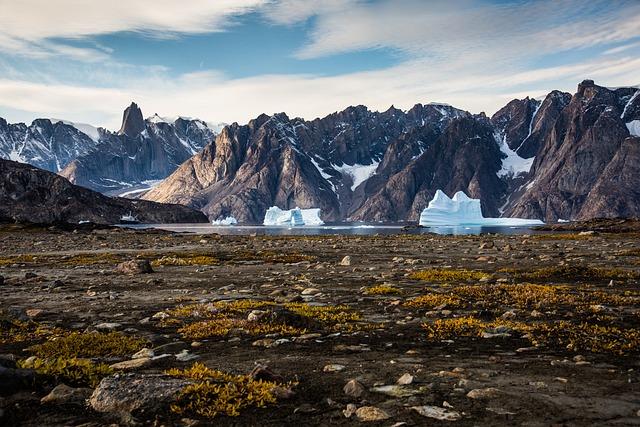
The United States has announced plans to construct two new military bases in Greenland as part of a recently finalized agreement with Denmark, the island’s sovereign nation. This strategic move underscores Washington’s growing interest in the Arctic region amid rising geopolitical tensions and the competition for influence in the increasingly accessible Arctic territory. The deal, confirmed by both U.S. and Danish officials, marks a significant development in defense collaboration and highlights Greenland’s emerging role in global security considerations.
US and Denmark Forge Strategic Partnership for Greenland Military Expansion
The recent agreement marks a significant step forward in Arctic security collaboration, as the United States commits to constructing two new military installations on Greenland’s strategically vital territory. This move is designed to enhance surveillance and defense capabilities in response to increasing geopolitical tensions and the growing international interest in Arctic resources. The partnership strengthens the long-standing ties between the US and Denmark, emphasizing mutual commitment to regional stability and advanced military infrastructure development.
Key elements of the military expansion include:
- Establishment of state-of-the-art air and missile defense systems
- Enhanced radar and early warning capabilities across the North Atlantic corridor
- Joint training exercises to foster operational readiness among allied forces
- Significant investment in Greenland’s local infrastructure supporting defense operations
| Base Location | Primary Function | Operational Timeline |
|---|---|---|
| Thule Air Base | Missile Defense and Radar Monitoring | Construction to Begin: 2025 |
| Kangerlussuaq | Logistics and Rapid Deployment | Operational by: 2027 |
Geopolitical Implications of US Military Presence in the Arctic Region
The decision to establish two new military bases in Greenland marks a significant shift in Arctic geopolitics, underscoring the strategic importance of the region amid escalating great power competition. The US aims to reinforce its presence to counterbalance the expanding influence of Russia and China, both of whom have been intensifying their military and economic activities in the Arctic Circle. These bases will not only enhance surveillance capabilities but also serve as critical hubs for rapid deployment, signaling a robust commitment to safeguarding vital shipping lanes and natural resources in a changing climate landscape.
Key geopolitical consequences include:
- Heightened regional security tensions as Arctic nations recalibrate their defense postures.
- Strengthening of the US-Denmark alliance, bolstering Western influence at the North Atlantic crossroads.
- Potential challenges to Greenland’s autonomy, with local political dynamics balancing between geopolitical interests and indigenous aspirations.
| Stakeholder | Interest | Strategic Advantage |
|---|---|---|
| United States | Military dominance & resource control | Enhanced rapid response & Arctic monitoring |
| Denmark | Territorial security & geopolitical leverage | Stronger NATO ties & regional influence |
| Russia | Arctic resource access & military presence | Countering NATO expansion |
| Greenland | Economic development & autonomy | Navigating interests between US & Denmark |
Environmental and Indigenous Concerns Surrounding New Military Bases
The decision to construct new military bases in Greenland has sparked significant controversy surrounding the potential environmental impact on the Arctic’s fragile ecosystem. Critics warn that increased military activity could accelerate ice melt, disrupt local wildlife, and contribute to pollution in this already vulnerable region. Environmental groups emphasize that increased human presence risks irreversible damage to native flora and fauna, with repercussions that could extend far beyond Greenland’s borders. Concerns also focus on the possible contamination from construction debris and increased emissions from military vehicles.
Indigenous communities in Greenland have expressed strong apprehensions over the project, fearing displacement and loss of cultural heritage. Their representatives call for meaningful consultation and inclusion in decision-making processes, stressing the importance of respecting conventional lands and lifestyles that have endured for centuries. Key points raised by indigenous leaders include:
- Preservation of sacred sites and avoidance of military zones overlapping with ancestral lands.
- Environmental stewardship aligned with indigenous knowledge and enduring practices.
- Guarantees on social and economic protections for local populations during and after base construction.
| Concern | Potential Impact | Status |
|---|---|---|
| Ice Sheet Stability | Possible acceleration of melting | Under Study |
| Wildlife Disruption | Habitat fragmentation | Ongoing Assessment |
| Indigenous Land Use | Risk of displacement and site damage | Consultation In Progress |
Recommendations for Ensuring Transparency and Regional Cooperation in Base Development
To uphold public trust and facilitate mutual benefits, it is indeed imperative that all base development activities are conducted with full transparency. Detailed disclosures of environmental impact assessments, financial allocations, and construction timelines should be made accessible to the Greenlandic population and also Danish authorities. Establishing autonomous oversight committees, inclusive of local representatives and international observers, can help monitor progress and ensure adherence to agreed-upon standards.
Furthermore,fostering regional cooperation among Arctic nations must be prioritized to maintain geopolitical stability and promote shared security goals. Coordinated dialogues on logistics, joint environmental protections, and emergency response frameworks can streamline defense operations while respecting sovereignty. The following table highlights key areas for sustained collaboration:
| Focus Area | Cooperation Objective | Potential Benefit |
|---|---|---|
| Environmental Monitoring | Real-time data sharing | Minimized ecological disruption |
| Search and Rescue Operations | Joint training exercises | Improved response times |
| Infrastructure Development | Shared technological resources | Cost efficiency and innovation |
| Security Communications | Interoperable systems | Enhanced threat detection |
Final Thoughts
The establishment of two new US military bases in Greenland marks a significant development in Arctic geopolitics, reflecting growing strategic interests in the region. As the United States and Denmark formalize this agreement, attention will remain focused on how the expanded American military presence will influence security dynamics and international relations in the Arctic. Further updates are expected as construction begins and the broader implications of this deal continue to unfold.