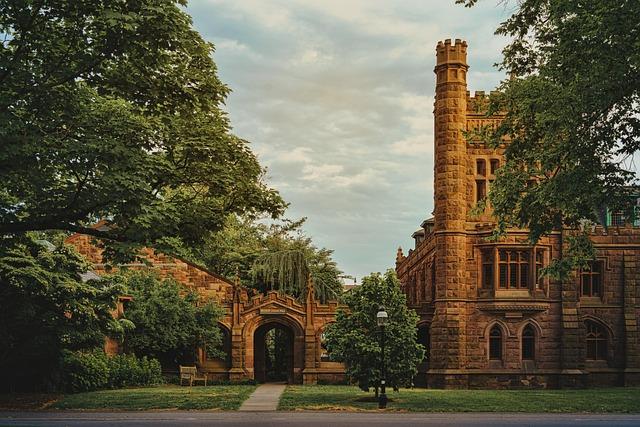
After a remarkable 15-year streak at the summit of the U.S. News & World Report college rankings, Princeton University’s reign has come to an end. Once synonymous with academic excellence and consistent top placement, the Ivy League institution has been overtaken, marking a significant shift in the competitive landscape of American higher education. This advancement not only signals changing dynamics among elite universities but also prompts a reevaluation of the factors that define academic prestige in today’s evolving educational environment.
Princeton’s Dominance and the Shifting Landscape of U.S. College Rankings
After a remarkable 15-year streak as the nation’s top university, Princeton University has slipped from the No. 1 spot in the latest U.S. News & World Report rankings, signaling a notable shift in the competitive landscape of American higher education. Once synonymous with academic prestige and consistent excellence, Princeton’s dominance is now facing challenges amid evolving criteria and rising stars within the Ivy League and beyond. Experts attribute this shift to a growing emphasis on metrics such as diversity,financial aid accessibility,and post-graduate outcomes,areas where other institutions have made significant strides.
The latest rankings illustrate broader trends reshaping college evaluations. Notably, several universities have leveraged innovative programs, enhanced student support services, and expanded global engagement to climb the rankings. A snapshot of this shifting terrain includes:
- New contenders: Universities with strong STEM and interdisciplinary offerings gaining prominence.
- Diversity and inclusion: Increased weight on campus demographic depiction and inclusivity practices.
- Financial commitment: Greater focus on institutions’ ability to provide meaningful financial aid packages.
| Institution | Previous Rank | Current Rank | Key Strength |
|---|---|---|---|
| Harvard University | 2 | 1 | Research Output |
| Princeton University | 1 | 3 | Undergraduate Focus |
| Stanford University | 3 | 2 | Innovation |
Factors Behind Princeton’s Decline and Harvard’s Rise to the Top Spot
Princeton’s inability to maintain its top-positioned status can be attributed to several critical factors that have subtly shifted its competitive edge over the years. One major contributor has been its relative stagnation in adapting to emerging fields such as data science and interdisciplinary studies, areas heavily prioritized in recent ranking algorithms. Additionally, while Princeton’s faculty-to-student ratio and alumni network remain strong, its investment in research output and diversity metrics did not keep pace with peer institutions, gradually diluting its overall score in comprehensive evaluations.
Conversely, Harvard’s sustained climb to the number one spot has been bolstered by strategic initiatives that align closely with US News’ evolving ranking criteria. Harvard has aggressively expanded its research funding, increased support for graduate programs, and broadened its outreach to underrepresented communities, which enhanced its diversity and inclusion ratings substantially.Below is a brief comparison illustrating key metrics that influenced the ranking shift:
| Metric | Princeton | Harvard |
|---|---|---|
| Research Expenditure (in $ millions) | 130 | 350 |
| Faculty-to-Student Ratio | 5:1 | 7:1 |
| Diversity Index Score | 78 | 91 |
| Alumni Giving Rate | 58% | 72% |
Impact of Rankings Changes on Student Choice and University Strategies
Rankings reshuffles like Princeton’s recent descent from the top spot send ripples through the higher education landscape, profoundly influencing both prospective students and university administrations. For many students, these rankings serve as a trusted compass amid the sea of choices, heavily weighing on decisions related to applications, enrollments, and financial aid opportunities. When a long-standing leader like Princeton drops, it often triggers a recalibration of student preferences, with some considering rising competitors or institutions that display fresh strengths in emerging fields.
Universities, in turn, are quick to respond with strategic realignments focused on reclaiming or enhancing their positions in future rankings cycles. Efforts may include:
- Investing in faculty research and recruitment
- Enhancing student support and career services
- Expanding infrastructure and campus facilities
- Improving graduation and retention rates
| University | Strategic Focus | Ranking Movement |
|---|---|---|
| Princeton | Research Expansion & Alumni Engagement | From 1st to 3rd |
| Stanford | Innovation & Tech Integration | From 3rd to 1st |
| Harvard | Financial Aid Enhancement | Maintained Top 5 |
Recommendations for Institutions Navigating the Evolving Higher Education Rankings System
As the higher education landscape shifts and traditional ranking metrics evolve, institutions must broaden their strategic approach beyond chasing numerical standings. Colleges and universities are encouraged to focus on transparent dialog about their unique strengths, such as innovative programs, inclusive campus culture, and impactful research initiatives. Emphasizing these qualities helps create a more holistic narrative that resonates with prospective students and stakeholders, distancing from the overreliance on rankings alone.
Implementing adaptive strategies can position institutions more effectively in this changing environment. Consider adopting the following practices to better navigate the complexities of rankings systems:
- Data-Driven Insights: Use comprehensive analytics to identify areas for genuine institutional growth rather than cosmetic improvements targeting ranking metrics.
- Enhanced Transparency: Publish detailed reports on student outcomes, diversity efforts, and faculty achievements to build trust beyond rank position.
- Stakeholder Engagement: Involve faculty, students, and alumni in continuous dialogue about institutional priorities and values.
- Innovative Program Development: Invest in emerging fields and interdisciplinary studies aligned with future workforce needs.
| Focus Area | Recommended Action | Expected Impact |
|---|---|---|
| Student Success | Expand mentorship and career services | Higher retention & employment rates |
| Research Innovation | Increase interdisciplinary collaboration | Enhanced institutional reputation |
| Diversity & Inclusion | Strengthen recruitment & support programs | More equitable campus environment |
Wrapping Up
Princeton’s unprecedented 15-year reign at the summit of the U.S. News & World Report rankings has come to an end, marking a significant moment in the landscape of American higher education. As the institution passes the torch, the shift underscores the evolving criteria and competitive dynamics that shape these influential rankings. While Princeton’s legacy of academic excellence remains unquestioned, the change invites broader reflection on what defines leadership and prestige in today’s university environment.