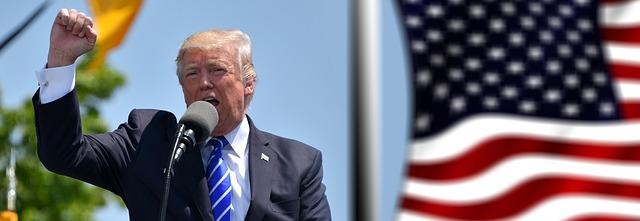
Former President Donald Trump has launched a legal campaign challenging his recent criminal conviction related to hush money payments, appealing to both state and federal courts in an effort to have the verdict overturned. The move marks the latest development in a high-profile case that has drawn intense public and political scrutiny. As Trump seeks to erase the conviction, legal experts and observers are closely watching how the judiciary will respond to his appeals amid broader debates over accountability and the rule of law. PBS reports on the unfolding legal battle and its potential implications for Trump’s political future.
Trump Pursues Legal Strategy to Overturn Hush Money Conviction in Multiple Jurisdictions
In a bold legal maneuver, Donald Trump has launched a series of appeals targeting both state and federal courts in an effort to nullify his criminal conviction related to hush money payments. His legal team contends that the conviction was flawed due to procedural errors and challenges the jurisdictional authority of the courts involved.Central to Trump’s argument is the claim that the indictment was politically motivated and that key evidence was unlawfully obtained, which they assert undermines the legitimacy of the entire prosecution.
The appeals introduce several strategic points, including:
- Questioning the admissibility of witness testimonies used during the trial.
- Challenging the scope and legality of search warrants executed to collect financial records.
- Arguing constitutional violations with respect to due process and equal protection clauses.
| Jurisdiction | Status of Appeal | Expected Resolution |
|---|---|---|
| New York State Court | Filed | Late 2024 |
| Federal Appeals Court | Under Review | Mid 2025 |
| Supreme Court (Potential) | Not yet petitioned | To Be Determined |
Observers note that this multi-jurisdictional approach seeks not only to overturn the conviction but also to set significant legal precedents regarding political prosecutions. The unfolding appeals will be closely watched for their broader impacts on campaign finance laws and the accountability of public officials in hush money controversies.
Analyzing the Impact of Dual State and Federal Appeals on High-Profile Criminal Cases
The convergence of state and federal appellate processes in high-profile criminal cases often amplifies legal complexity, public scrutiny, and the timeline for judicial resolution. In the case of Donald Trump’s recent appeals seeking to overturn his hush money conviction, both jurisdictions offer distinct procedural avenues yet intertwine in the broader pursuit of justice and legal clarity. State courts primarily focus on interpreting state criminal codes and procedural errors, while federal courts assess constitutional claims and due process concerns, creating a dynamic dual-layered system that can profoundly impact case outcomes and public perception.
Key aspects of navigating dual appeals include:
- Jurisdictional challenges: Determining which court has precedence on overlapping legal issues can prolong litigation.
- Strategic filings: Litigants frequently enough leverage federal appeals to seek broader constitutional relief beyond state-specific rulings.
- Public and media interest: High-profile defendants like Trump ensure these legal battles unfold under intense, continuous media coverage, influencing both legal strategy and public opinion.
| Behavior | State Appeal Focus | Federal Appeal Focus |
|---|---|---|
| Criminal Conviction | State law violations, evidentiary review | Constitutional protections, due process |
| Sentencing | State sentencing guidelines adherence | Federal civil rights implications |
| Procedural Motions | Local procedural errors or misconduct | Violation of constitutional rights |
Expert Perspectives on the Challenges Facing Trump’s Conviction Reversal Efforts
Legal analysts emphasize that overturning a criminal conviction, especially in a case involving significant political ramifications, presents formidable hurdles. One major challenge lies in the high burden of proof required to invalidate jury findings post-trial. Courts typically require clear and convincing evidence of legal error or procedural misconduct to consider a reversal.Additionally,the complex interplay between state and federal jurisdictions introduces procedural intricacies that could hinder swift judicial relief. Experts highlight that Trump’s defense will need to navigate a labyrinth of appellate standards, including claims of prosecutorial misconduct, evidentiary disputes, and constitutional challenges, all while withstanding stringent scrutiny from both trial and appellate judges.
- Jurisdictional conflicts: Balancing state and federal legal principles complicates appeal strategies.
- Political considerations: Highly charged nature of the case may affect impartiality perceptions.
- Procedural strictness: Courts frequently enough defer to initial verdicts barring manifest errors.
| Aspect | Description | Impact |
|---|---|---|
| Appellate Standard | De novo or abuse of discretion review | Limits scope of reversal |
| Evidence Reassessment | New vs. existing evidence evaluation | Affects case viability |
| Jurisdictional Barriers | Federal vs. state court authority | Delays and complexity |
Moreover, constitutional scholars weigh in on the implications of upending a conviction based on alleged political bias or selective prosecution claims. While such arguments might garner public attention, courts remain cautious to preserve judicial independence and avoid undermining the rule of law. The legal community debates whether Trump’s team can substantiate claims of infringement upon due process rights that meet the exacting standards of constitutional law. Meanwhile, procedural tactics such as filing parallel appeals in multiple courts risk prolonging the litigation process without guaranteeing favorable outcomes.The intricacies of both criminal procedure and constitutional protections form a formidable barrier that Trump’s legal teams must tactically address if they hope to achieve full exoneration.
Recommendations for Monitoring the Legal Proceedings and Understanding Potential Political Ramifications
Keeping abreast of developments in both state and federal courts is essential to grasp the evolving dynamics of this high-profile legal battle. Observers should monitor key court dates, oral arguments, and rulings, as each could considerably impact the trajectory of the case and set legal precedents concerning campaign finance laws. Additionally, filings and judicial opinions often reveal the legal strategies employed, which can provide insight into potential outcomes and the vigor of each side’s defense.
Attention should also be given to the following areas:
- Judicial appointments and political affiliations: These can shape courtroom dynamics and influence rulings.
- Legislative responses: Lawmakers might propose new regulations or amendments reacting to the case’s implications.
- Public and media discourse: Shifts in public sentiment and coverage may affect political capital and future campaigns.
- Impact on upcoming elections: Legal developments can reverberate through voter behavior and party strategies.
| Aspect | Potential Ramification |
|---|---|
| Court Rulings | Precedents affecting campaign finance enforcement |
| Media Coverage | Public opinion shaping political narratives |
| Political Response | Legislative action and election strategies |
To Wrap It Up
As Donald Trump continues to challenge the legal ramifications of his hush money conviction, his appeals to both state and federal courts underscore the ongoing complexities surrounding his legal battles. The outcomes of these proceedings will not only impact Trump’s own future but may also set significant precedents in the broader landscape of criminal law and political accountability. Observers and legal experts alike will be closely watching the developments as the courts deliberate on these critical appeals.