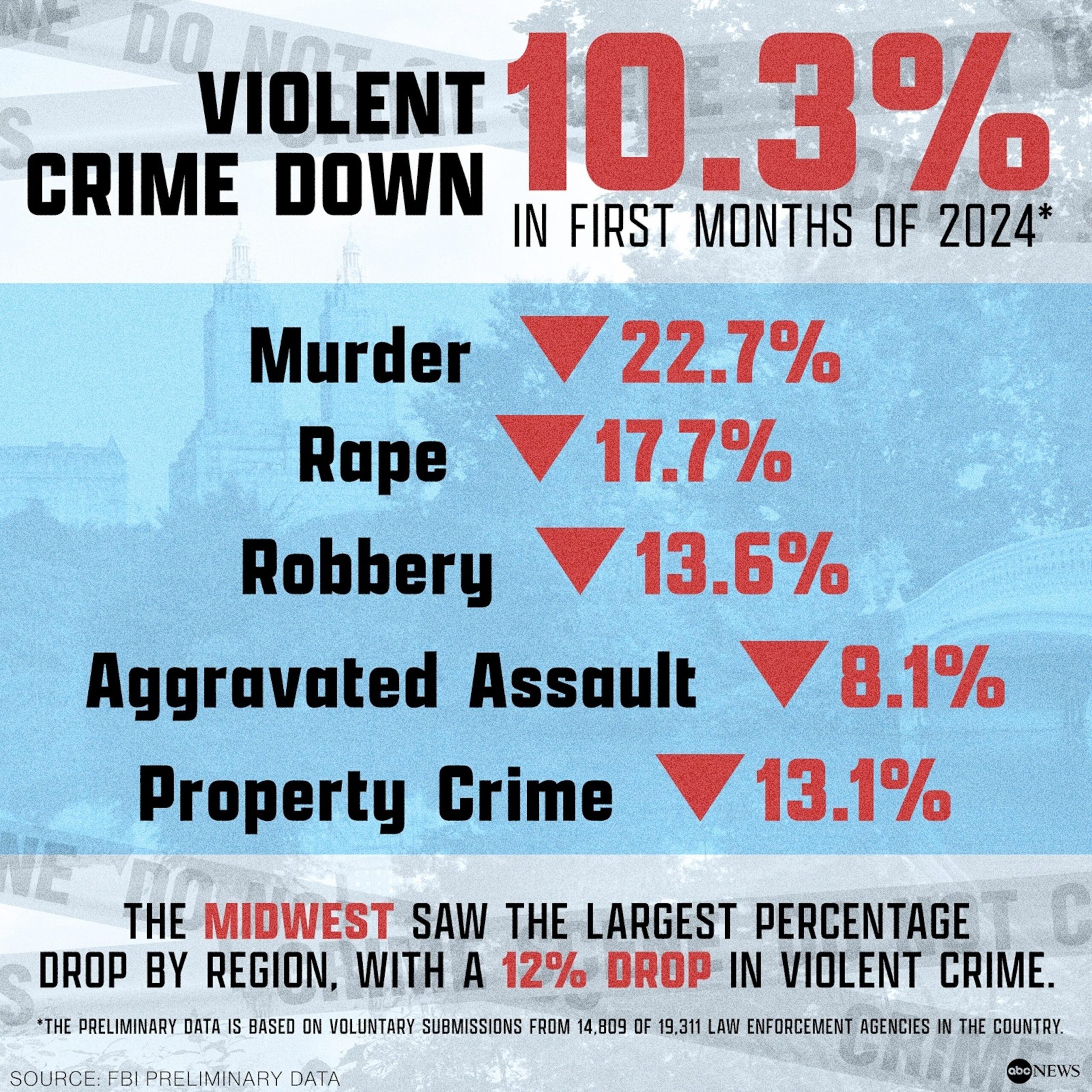
In recent years, violent crime has emerged as a deeply polarizing issue in American politics, with advocates on both the left and the right often presenting conflicting narratives and policy prescriptions. However, a closer examination reveals that both sides frequently misunderstand key aspects of the causes, scope, and solutions to violent crime. This article explores the common misconceptions held by political factions across the spectrum and seeks to offer a more nuanced understanding of the complex realities behind violent crime in the United States.
Misconceptions Fueling Partisan Divides on Crime Statistics
One major misperception is the belief that violent crime rates are uniformly increasing across the nation. While headlines often dramatize spikes in certain areas, the broader data paints a more nuanced picture. Crime tends to be highly localized, with specific neighborhoods experiencing surges while others maintain or even reduce levels of violence. This disparity is frequently overlooked in partisan narratives, which prefer sweeping generalizations that serve political agendas rather than informing public policy. Furthermore, the types of violent crime highlighted tend to shift politically, with gun violence emphasized by some and homicides or robberies by others, obscuring the complex reality behind the statistics.
Another persistent error lies in the interpretation and presentation of raw numbers without context. Both sides often fail to account for factors such as changes in population density,reporting practices,or improvements in law enforcement techniques that affect data collection. Simplistic comparisons can distort the truth and fuel unneeded fear or complacency. Consider the following illustrative breakdown of violent crime trends:
| Crime Type | 5-Year Trend | Year-to-Year Variation |
|---|---|---|
| Homicides | Moderate increase | +2.5% |
| Robberies | Declining | -4.3% |
| Aggravated Assaults | Stable | +0.1% |
| Gun-related Incidents | Variable by locality | Varies widely |
This complexity highlights why relying on simplistic partisan talking points does little to advance meaningful understanding or bipartisan solutions.
The Impact of Socioeconomic Factors Often Overlooked in Political Debates
Political discourse around violent crime frequently misses the mark by ignoring the crucial role of socioeconomic conditions. Factors such as poverty, education inequality, and unstable housing profoundly influence crime rates but rarely receive adequate bipartisan attention. While the right frequently enough emphasizes law enforcement and the left focuses on reform and rehabilitation, both camps typically overlook how deeply entrenched economic disparities create fertile ground for crime in the first place. Without addressing these root causes, policies remain surface-level solutions that fail to produce lasting change.
Several key socioeconomic elements correlate strongly with violent crime, yet they rarely feature prominently in mainstream debates:
- Low educational attainment: Limited access to quality education reduces economic mobility and increases susceptibility to criminal behavior.
- High unemployment rates: Joblessness exacerbates financial stress and desperation, often prompting illegal activity as a survival mechanism.
- Inadequate social services: Underfunded programs fail to support at-risk populations, enabling cycles of violence to perpetuate.
| Socioeconomic Factor | Crime Impact |
|---|---|
| Educational Disadvantage | ↑ Youth crime rates |
| Unemployment | ↑ Property and violent crimes |
| Housing Instability | ↑ Community violence |
Balancing Public Safety with Effective Criminal Justice Reform
Effective policy must find a middle ground that addresses the urgent need for public safety while advancing meaningful reforms. While policymakers frequently enough frame the discourse as a binary between tough-on-crime tactics and lenient justice reforms,the reality demands a nuanced approach.Community engagement, smart sentencing, and data-driven policing have shown promise in reducing violent crime without sacrificing civil liberties or perpetuating systemic inequalities. Success stories from cities that have integrated social services with law enforcement illustrate how preventative measures can complement conventional enforcement.
- Collaborative models: Partnerships between police, social workers, and community organizations foster trust and reduce recidivism.
- Judicial discretion: Allowing judges more leeway in sentencing supports individualized justice that considers underlying causes of crime.
- Transparency and oversight: Independent review boards and public reporting keep law enforcement accountable.
| Policy Element | Impact on Public Safety | Impact on Reform Goals |
|---|---|---|
| Hybrid Community Policing | Reduces violent incidents by 15% | Builds local trust and cooperation |
| Sentencing Adaptability | Maintains deterrence while reducing incarceration rates by 10% | Encourages rehabilitation and reduces jail overcrowding |
| Enhanced Oversight Mechanisms | Improves complaint response times by 20% | Increases transparency and accountability |
Ultimately, balancing these priorities requires rejecting partisan simplifications and embracing policies that are both evidence-based and sensitive to community needs. Radical approaches from either side-whether unchecked punitive measures or untested leniency-risk deepening harms rather than mitigating them. Thoughtful reform grounded in measurable outcomes and social equity can break the cycle of violence and incarceration, ensuring safer streets and stronger communities.
Policy Solutions That Bridge Ideological Gaps on Violence Prevention
Bridging the divide on violent crime requires a fresh approach that transcends traditional partisan talking points. Policy solutions must be rooted in data and pragmatism rather than ideological allegiances. This means embracing a dual strategy that balances both community investment and law enforcement reform. On one hand, funding for social services like mental health care, education, and housing can address root causes of violence. On the other,modernizing policing tactics and reducing bureaucratic inefficiencies can restore public trust and effectiveness. Across the spectrum, these priorities should be seen as complementary, not contradictory.
Concrete initiatives gaining bipartisan traction include:
- Focused deterrence programs, which target repeat violent offenders while offering support to those at risk.
- Community policing models that improve relations between law enforcement and neighborhoods.
- Data-driven gun control policies focused on illegal trafficking networks rather than broad restrictions.
| Policy Element | Common Ground Benefits |
|---|---|
| Community Investment | Reduces underlying causes of violence |
| Modern Policing | Enhances public safety & accountability |
| Targeted Gun Control | Limits criminal access without infringing rights |
Concluding Remarks
In navigating the complexities of violent crime, it is indeed clear that neither side of the political spectrum holds all the answers. The debate often oversimplifies a multifaceted issue, overlooking the nuanced factors that contribute to crime rates and community safety. A balanced approach, grounded in evidence rather than ideology, is essential to crafting policies that effectively address the root causes of violence while ensuring justice and security for all. As this discussion continues, it is indeed crucial for policymakers and the public alike to move beyond partisan narratives and engage with the data and lived realities that shape the landscape of violent crime in America.